What Vibe Coding Means for Your Business
Vibe coding lets you describe what you want and AI writes the code. Here is what that means for small B2B service businesses building custom tools.
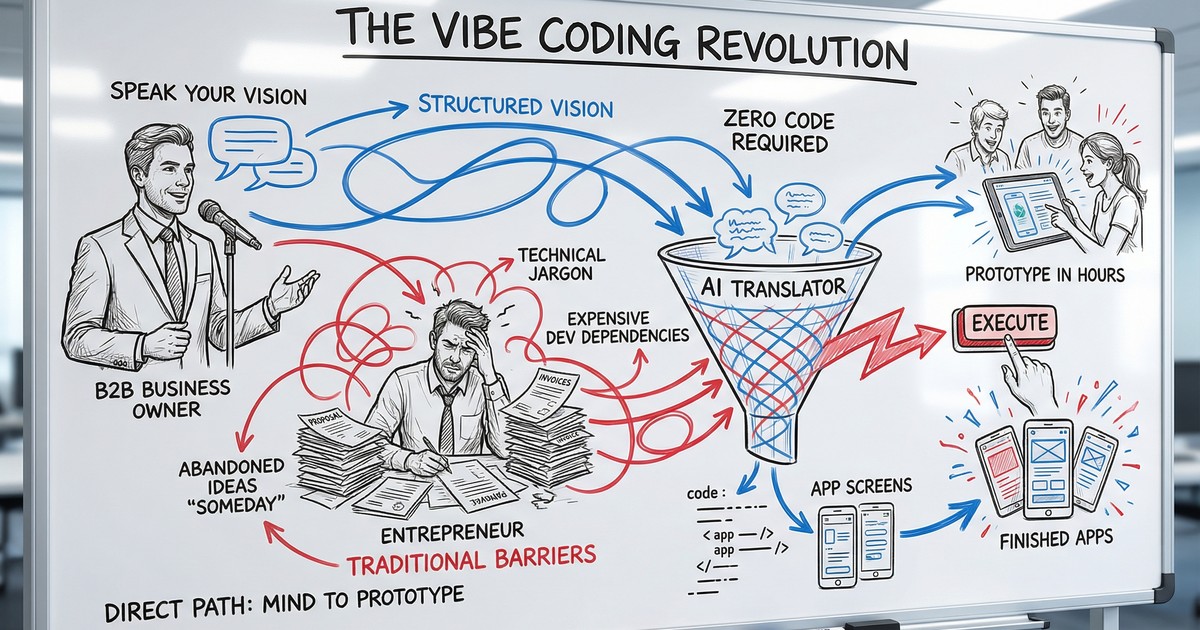
You Have Ideas, but No Way to Build Them
You know exactly what your business needs. A client dashboard that pulls data from three different tools. A proposal generator that fills itself in after a discovery call. An internal tracker that replaces the spreadsheet everyone hates but nobody has time to fix.
The ideas are clear. The gap is execution.
In conversations with B2B service businesses, we hear the same pattern. Half the team’s time goes to admin tasks that should be automated. People hired for client-facing roles end up doing manual data entry. The frustration is about knowing a better solution exists and not having the technical skills to build it.
Traditionally, you had two options. Hire a developer, which means weeks of back-and-forth, a budget starting at tens of thousands of euros, and a result that may or may not match what you had in mind. Or use a no-code platform, which gets you started fast but hits a wall the moment you need something custom.
Eight months ago, a third option appeared.
What Vibe Coding Actually Is
On February 3, 2025, Andrej Karpathy introduced a term that changed how people think about building software. Karpathy, the former Tesla AI director and OpenAI founding member, described “a new kind of coding” where you “fully give in to the vibes” because AI tools “are getting too good.”
The concept is straightforward. You describe what you want in plain language. The AI generates the code. You review the output, adjust your description, and iterate until it works. No syntax to memorize. No frameworks to learn. You focus on what the tool should do, and the AI handles how.
Collins Dictionary named “vibe coding” the Word of the Year for 2025. Non-technical people started building real software with it.
The term carries some baggage. “Vibes” suggests a lack of rigor, and there are genuine risks when AI-generated code goes to production without proper review. But as an approach for prototyping, validating ideas, and building internal tools, vibe coding is a genuine shift in what is possible for small businesses.
More Than Lego Blocks: How It Compares to No-Code
If you have used platforms like Bubble, Webflow, or Zapier, you already understand the appeal of building without writing code. These tools work well for what they do. But they come with a ceiling.
Think of no-code platforms as Lego sets. You can build impressive things, but only from the pieces in the box. Need a shape that does not exist? You are stuck. The drag-and-drop interface that makes them easy to start with is the same thing that limits how far you can go.
Vibe coding removes that constraint. Because the output is actual code, you can build nearly anything. Custom logic, unique interfaces, integrations with obscure APIs, workflows that no template anticipated. You describe the thing you need, and the AI constructs it.
The trade-off is predictability. No-code platforms are stable because they are constrained. You know what you are getting. Vibe coding gives you more freedom, but the output needs more review. The code works, but it may not be optimized, secure, or maintainable without a second look.
For most B2B service businesses, the sweet spot is using vibe coding where no-code platforms fall short: the custom internal tools, the specific integrations, the workflow automations that are too unique for a template.
What Business Owners Are Building
The numbers tell a story. A quarter of recent startups (backed by Venture Capital company Y Combinator), rely on AI to write 95% or more of their code. Thirty-five percent of new US startups are now sole founders, a surge driven largely by AI and no-code tools. Solo entrepreneurs are building products for a few thousand euros that development agencies would have quoted at hundreds of thousands.
Anthropic CEO Dario Amodei predicted in May earlier this year that we will see the first billion-dollar company run by just one or two people by 2026. That may sound extreme, but the trajectory is clear: the gap between what a small team can build and what used to require a full engineering department is shrinking fast. For B2B service businesses specifically, the most common use cases are practical and immediate:
- Client-facing dashboards that pull data from existing tools and present it in a way that makes sense for your clients, not the way the tool decided to display it.
- Proposal generators that take structured input from a discovery call and produce a first draft in minutes instead of hours.
- Reporting tools that aggregate information from multiple sources into a single view, replacing the weekly “copy numbers into the spreadsheet” ritual.
- Internal CRM customizations that make your existing tools work the way your team actually operates, not the way the vendor designed them.
One agency we spoke with was spending half their team’s time on admin tasks that could have been automated. Their staff, originally hired for client-facing roles, were functioning as manual database administrators. The tools they needed existed in concept, just not as off-the-shelf products. Vibe coding closed that gap. It gave one person the ability to build the tools the team needed.
The Speed Advantage
Hiring a freelance developer in Europe typically costs between €80 and €150 per hour. A custom internal tool might take 40-80 hours to scope, build, and test. That is €3,200 to €12,000, plus weeks of elapsed time, before you know if the tool actually solves the problem.
Vibe coding compresses that timeline dramatically. One person, with a clear idea of what they need, can have a working prototype in an afternoon. The cost is the AI subscription you are already paying for. The elapsed time is a single focused session.
This matters most for small businesses because you already have a speed advantage over larger competitors. Enterprise companies have procurement cycles, security reviews, and approval chains that add months to any technology decision. You do not. Vibe coding amplifies the advantage you already have.
The important distinction is between a prototype and a production system. A working prototype validates the idea: yes, this tool would save the team 10 hours a week. Yes, this dashboard would make client reporting painless. Yes, this integration is technically possible. That validation used to cost thousands of euros and weeks of waiting. Now it costs an afternoon.
When the prototype proves the concept, that is the right time to invest in professional development for the production version, with proper security, testing, and architecture. But you are investing with confidence, because you have already proven the idea works.
Where to Start
Start with something low-stakes. Pick a task your team does manually every week that feels like it should be automated. Do not start with your most complex process or anything that touches client data.
Good first projects:
- A simple dashboard that pulls data from your CRM or project management tool and displays it in a way that is actually useful.
- A data formatter that takes information from one system and restructures it for another, replacing the copy-paste workflow.
- A client intake form with conditional logic that captures the right information before a discovery call.
The tools are accessible. Claude, ChatGPT, Cursor, and Windsurf all support this style of development. Describe what you need. Review what you get. Iterate until it works.
Set your expectations correctly. The first version will not be perfect. That is the point. You are validating the concept, not shipping to production. If the prototype proves valuable, you can then decide whether to refine it yourself or bring in professional help for the production version.
The businesses that will benefit most from this shift are the ones that start building now, even imperfectly, rather than waiting for the tools to get even better. They are already good enough to close the gap between “I know what I need” and “I can build what I need.”
Update: The Other Side of Vibe Coding
Since publishing this article, vibe coding has evolved rapidly. The opportunity is real, but so are the risks. Security researchers have documented dozens of vulnerabilities in AI-generated applications, from exposed admin panels to plaintext credential storage. Speed without guardrails can put your business data at risk.
We wrote a follow-up covering the security incidents, the hidden costs of skipping code review, and how to adopt AI in development without exposing your business: The Dark Side of Vibe Coding for Businesses. If this article got you excited about the possibilities, that one will help you avoid the pitfalls.
Curious where AI fits in your business? Schedule a free AI Readiness Assessment and we will map out what is worth building, what is worth buying, and where to start.

Thom Hordijk
Founder
Get posts like this in your inbox every week
Weekly insights on AI and automation for B2B service businesses. No hype, just what works.
Related Articles
View all articles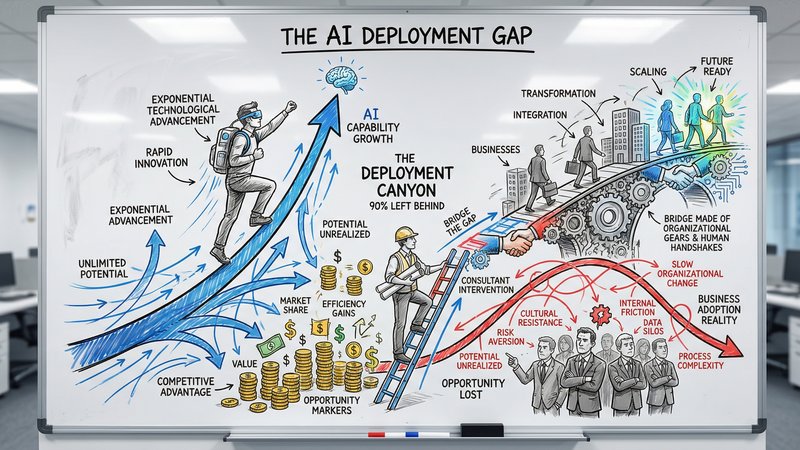
90% of Businesses Don't Use AI. That's the Opportunity.
90% of US businesses still don't use AI in production. The gap between capability and deployment is where the real opportunity lives for service businesses.

The Dark Side of Vibe Coding for Businesses
One year after the birth of vibe coding, the security incidents are adding up. Learn why speed without safety puts your business data at risk.
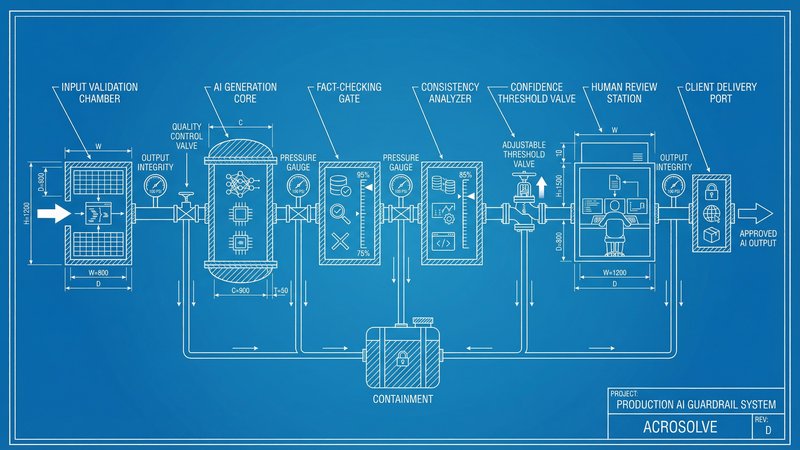
AI Reliability: The Missing Piece in Production Deployment
Only 31% of AI use cases reach production. The gap is not capability, it is reliability. Here is how to build AI systems your team and clients can actually trust.